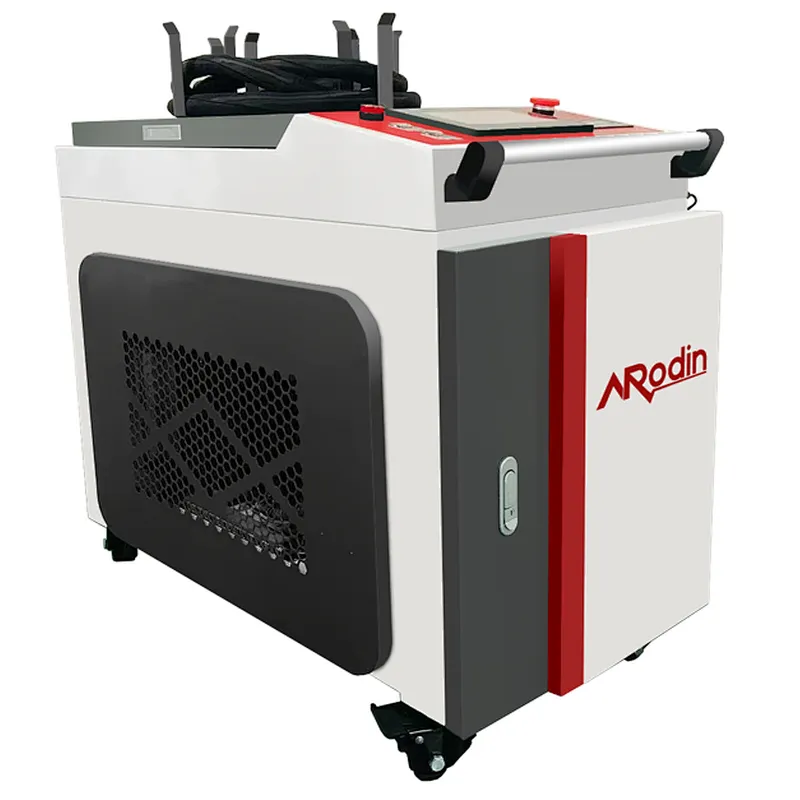
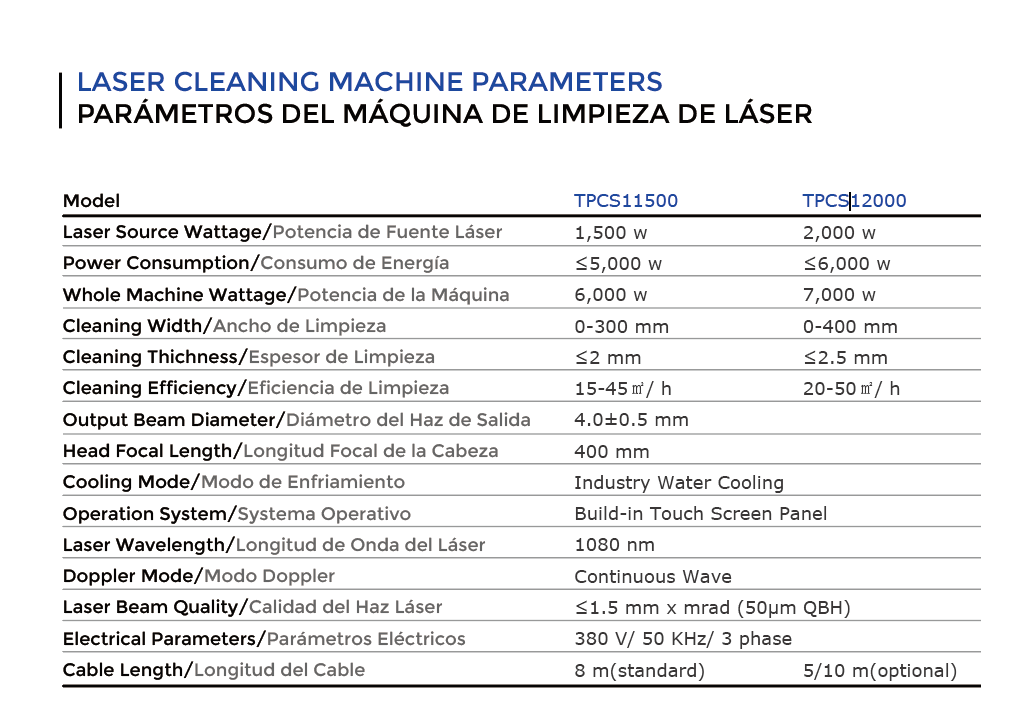
The TPCS single axis series
The FLCA series are a heavy duty, industrial-grade, laser cleaning and surface treatment system for large areas requiring cleaning, deep painting and other surface preparation operations. This handheld mobile cleaning machine offers a non-abrasive cleaning process that is safer, easy to use and more eco-friendly.
MRodin machines are relatively open source and customers can choose configurations according to their needs. MRodin enjoys first-class response from suppliers, obtains priority after-sales.
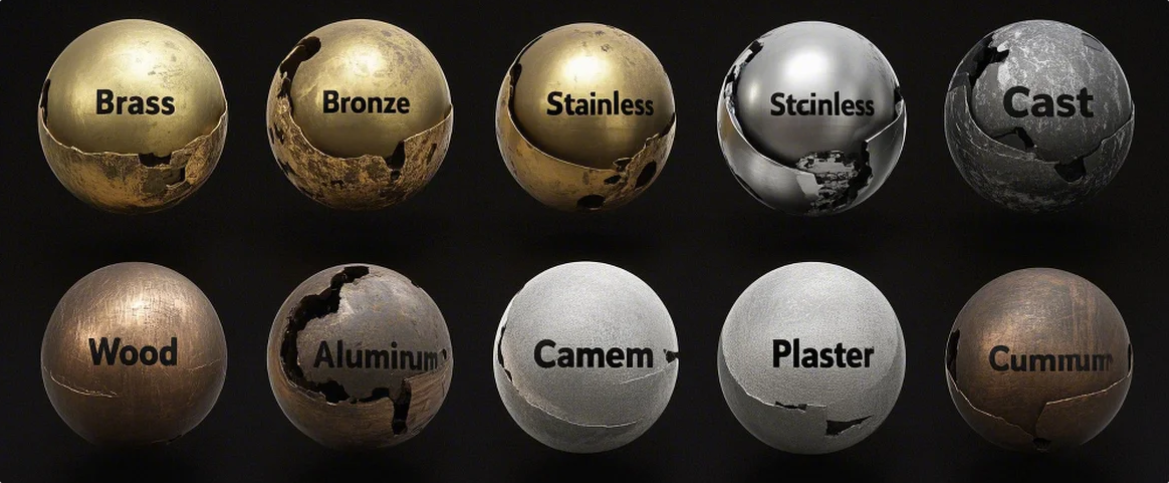
Laser cleaning technology, as an advanced surface treatment method, has revolutionized industrial cleaning processes with its precision, efficiency, and eco-friendliness. By utilizing high-energy laser beams to remove contaminants (e.g., rust, paint, oxides) without damaging substrates, it is increasingly adopted across diverse industries.
Key Application Industries
1. Automotive Manufacturing
- Component Cleaning: Laser cleaning efficiently removes rust, oil residues, and welding slag from engine blocks, gearboxes, brake discs, and wheel hubs, ensuring surface integrity and enhancing production efficiency.
- Paint Stripping: Selectively removes old coatings from car bodies and critical weld seams, preparing surfaces for repainting or quality inspection.
2. Aerospace Industry
- Aircraft Surface Maintenance: Safely strips aged paint layers from aircraft surfaces without harming metal substrates, addressing safety concerns in traditional mechanical methods.
- Composite Material Processing: Cleans carbon fiber-reinforced polymers (CFRP) and adhesive layers for bonding preparation, ensuring structural reliability.
3. Mold and Tooling
- Tire Mold Cleaning: Rapidly removes rubber residues and anti-stick coatings, reducing downtime and avoiding chemical pollution in food-grade molds.
- Plastic/Rubber Molds: Maintains precision by eliminating contaminants without physical abrasion.
4. Electronics and Precision Instruments
- Oxide Removal: Ensures optimal electrical contact by deoxidizing component pins before circuit board soldering.
- Grease Elimination: Non-contact cleaning of delicate parts (e.g., medical devices) avoids chemical corrosion.
5. Rail Transit and Shipbuilding
- High-Speed Rail Components: Replaces chemical and manual methods for rust and coating removal, aligning with green manufacturing trends.
- Ship Surfaces: Cleans hulls and pipelines, preventing corrosion and improving maintenance efficiency.
6. Cultural Heritage and Architecture
- Art Restoration: Gently removes dirt and oxides from historical artifacts without altering original textures.
- Building Facades: Restores aesthetics by stripping pollutants and old coatings from walls and sculptures.
7. Military and Defense
- Weapon Maintenance: Removes hazardous coatings and controls corrosion on military equipment.
- Nuclear Decontamination: Safely cleans radioactive residues in reactors and pipelines.
8. Medical and Nuclear Industries
- Sterilization Preparation: Cleans stainless steel medical tools to withstand high-temperature sterilization.
- Nuclear Power Plants: Maintains pipeline integrity by removing radioactive contaminants.
Advantages Over Traditional Methods
- Eco-Friendliness: Eliminates chemical solvents and reduces wastewater/emissions.
- Precision and Safety: Non-contact operation preserves substrate integrity and allows access to complex geometries.
- Cost Efficiency: Low energy consumption, automation compatibility, and reduced labor costs.
Future Trends
- Smart Manufacturing: Integration with robotics and AI for automated, high-precision cleaning.
- Material Versatility: Expanding applications to non-metallic materials (e.g., glass, ceramics).
- Sustainability: Enhanced adoption in green industries like renewable energy and electric vehicles.
 Español
  Portugues
  English
